There’s nothing quite as soul-warming as that first sip of hot coffee. It can silence the chaos of a busy Tim Hortons, ward off the tiresome workday, and shake off any lingering sleepiness. Its comfort uplifts like no other beverage. Here in Canada, it has become a staple in making the long winter frost bearable, enjoyable even.
Yet, behind every cup of coffee is a much larger story – one that stretches across continents and generations. For my family, and so many other Latinos like us, coffee connected the snowy streets of Canada to the tropical forests of El Salvador.
I remember having my very first double-double at a Tim Hortons. It was the beginning of my practicum at the University of Alberta. My morning cafecito wasn’t going to be enough to get me through the long night of studying, so I went for an afternoon jolt at the Timmies just off campus. As I stood in the line that nearly trailed out the door, I understood that although it had been fifty years after the first Tim Hortons had opened, the iconic coffee chain had become one of the most popular symbols of Canadian culture. Coffee is more than just a beverage for Canadians: it’s a ritual, a source of comfort, a moment of sharing.
Coffee arrived in what is now Canada during the colonial period[1] and gradually became woven into the country’s social fabric. As the country evolved in its complex multiculturalism, so too did coffee transform from simple product or commodity, to an experience, an art. This progression has led to more attention being drawn to beans, roasts, brewing methods, and growers. It has also raised important questions about the social and environmental impact of our daily morning ritual. Consumers increasingly inquire about origin, farmer pay, farming practices, and business transparency. With this new focus on coffee, quality and ethics have become increasingly important considerations for consumers.
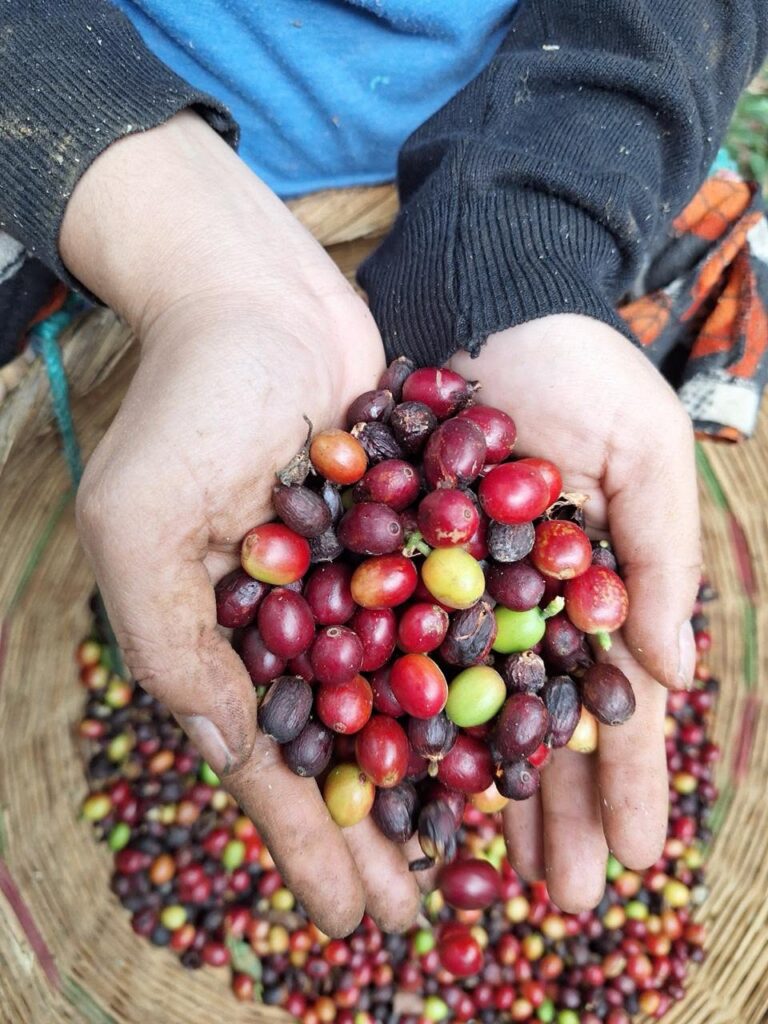
Coffee originated in East Africa and spread through the Arab world centuries earlier, eventually being introduced to Central America through European colonial trade networks. Although coffee had been introduced to El Salvador by the mid-eighteenth century, it did not become a major export crop until the mid-nineteenth century. As indigo’s economic importance declined, coffee increasingly took its place in the country’s export economy.[2]
The expansion of coffee production transformed El Salvador’s economy and politics. The Liberal Reforms of 1881 and 1882 by President Rafael Zaldivar dissolved communal and indigenous lands, turning them into large private estates tailored for coffee. The industry’s immense wealth became increasingly concentrated among fourteen families, known collectively as Las Catorce Familias, who controlled much of the nation’s production and export wealth. This small, elite group monopolized land and export revenues, creating massive wealth inequality and social unrest.
The marginalization of rural and indigenous peoples led to a catastrophic uprising. In 1932, a peasant revolt was met with brutal military force and resulted in the deaths of tens of thousands of Salvadorans. La Matanza[3] (The Massacre) has been described as an ethnocide, causing the extermination of the majority of the indigenous Pipil-speaking population. La Matanza shaped decades of political repression and social inequality, conditions that contributed greatly to the Salvadoran Civil War (1979-1992).
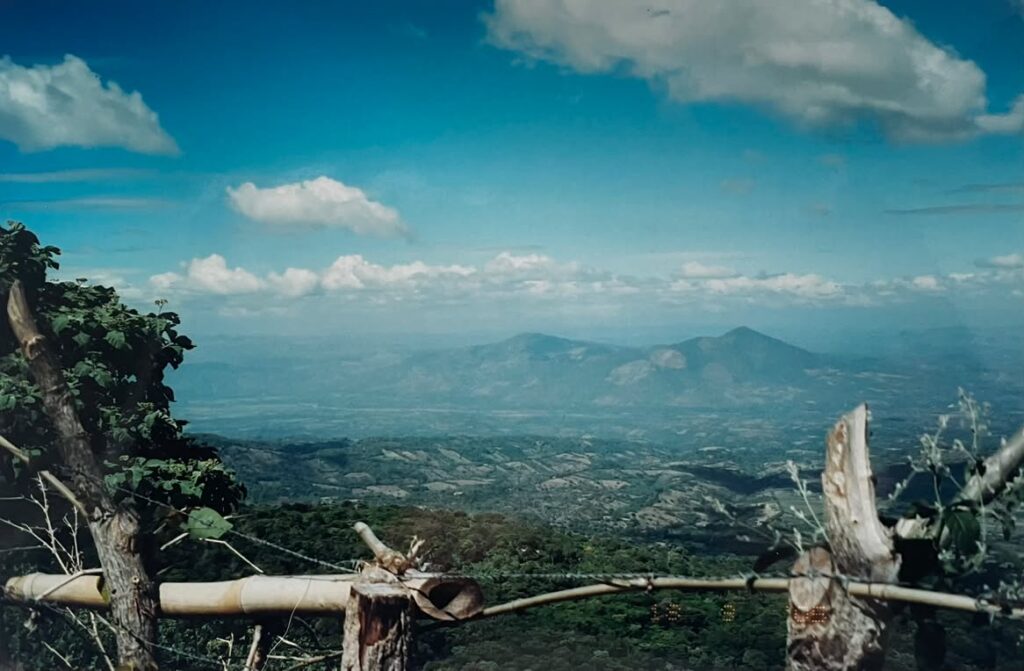
My parents narrowly escaped the war and arrived in Edmonton, Alberta, in 1987. Their belongings were limited, but among the very few treasured items, was a simple tin pot. The pot was small and unremarkable. Yet, it crossed borders and survived displacement. It was scratched and dented, but each day it brewed a small taste of El Salvador.
This humble pot helped transform an unfamiliar country into a home.
When my parents arrived in Canada, they became part of the more than 35,000 Salvadorans who sought refuge and would go on to create communities that would reshape cities such as Edmonton, Calgary, Toronto, and Vancouver. My parents quickly learned that the friendliest, and quickest way to connect with not just other Latinos but Canadians as well, was over a cup of coffee. Sharing a cafecito creates a moment to pause, connect, and, of course, debate who makes the best coffee.

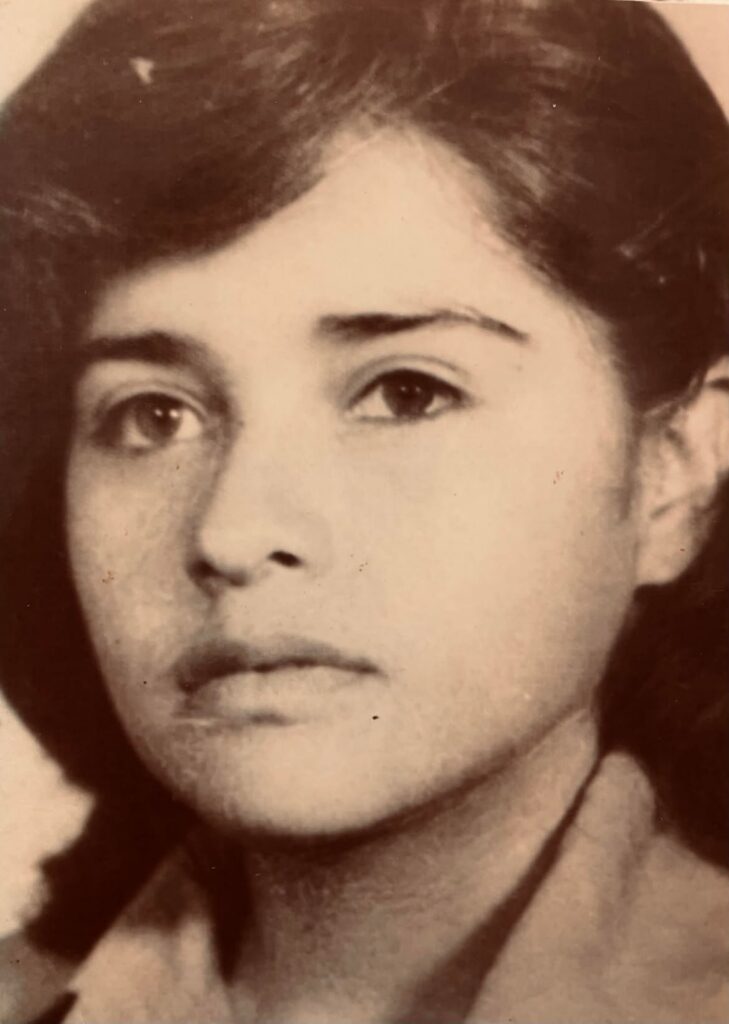

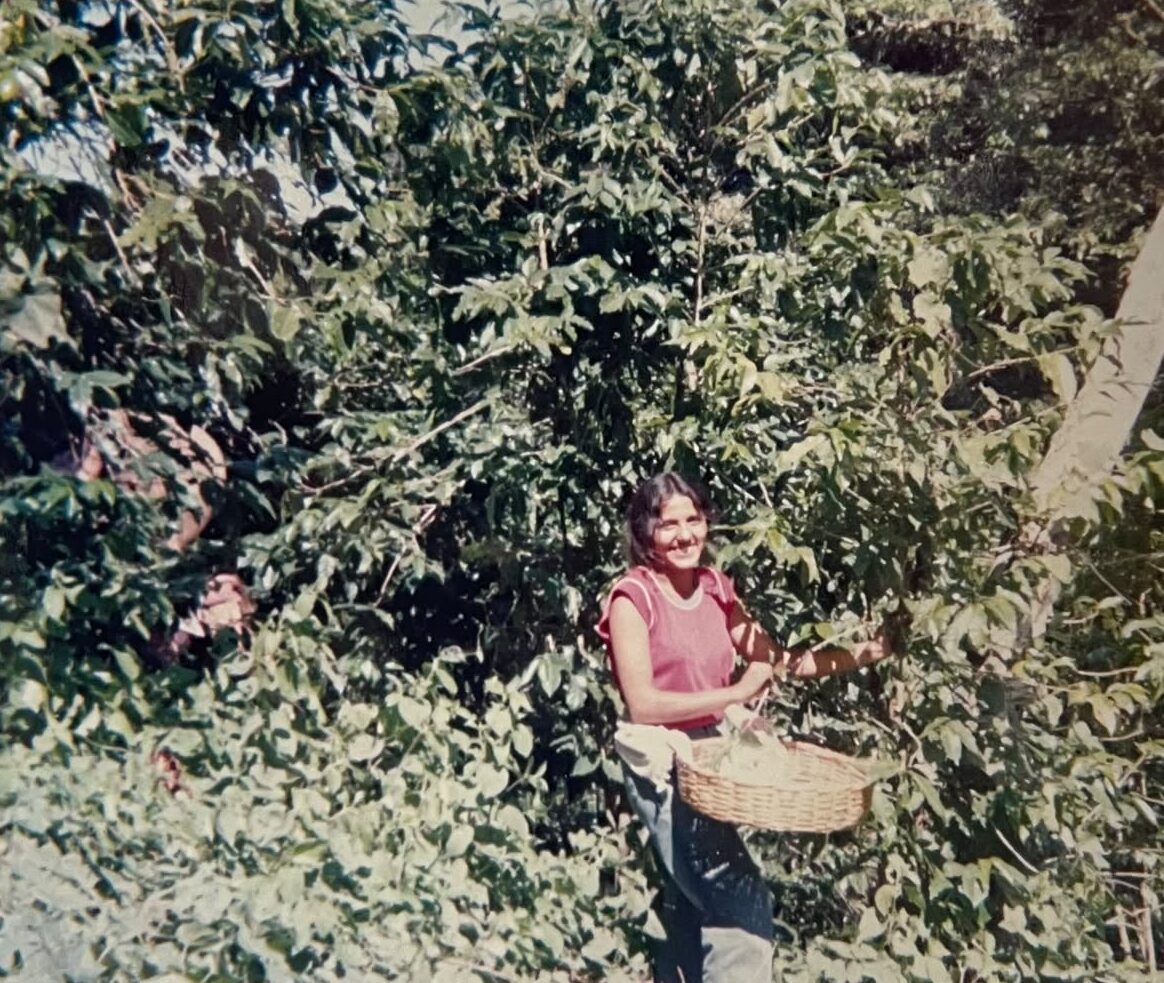
While doing research for my novel, Mangos and Snowflakes, I asked my mom what it was like to work in the coffee plantations in El Salvador prior to the war. I expected my mom’s description of picking coffee in El Salvador during her youth to be one of pain and suffering. But what she shared were fond memories.
She loved picking coffee beans in la finca, especially in the morning: the grey sky greeting the morning sun, the green and red cherries peeking through the looming greenery, the maze of shrubs mingling with the leftover morning mist, the sweet, tropical smell tickling her nose. The days were long and hot, the bugs unrelenting, and the work physically exhausting. But, she would strap her basket to her waist, and pick furiously, choosing only the reddest cherries. As the cherries would begin to release their sticky, gooey, sugar-rich layer of fruit flesh, weighing down her basket, she would have to focus carefully to avoid toppling forward.
At the end of the day, her fingers would be numb, her back sore, and her face more sun-kissed than ever, but she felt light, supported by the land, grateful for each cherry she managed to pick. It was these cherries that allowed her to buy food, pay her school fees, and continue to live. It gave her hope.
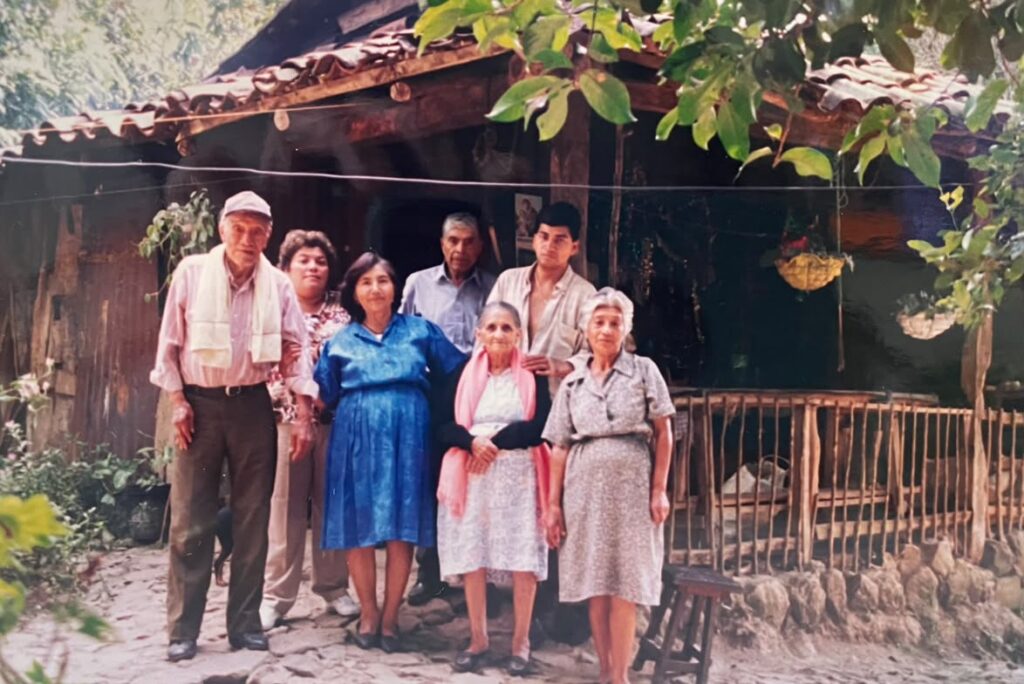
Today, my mom still begins and ends her day with her cafecito. The warmth of the milk heating on the stove, the whistle of the kettle boiling water, and the comforting aroma of the roasted beans fill the house each morning. Although coffee in Central America is deeply intertwined with colonization, the exploitation of Indigenous populations, and the brutal transatlantic slave trade, it is also a symbol of the strength of the Latin American people. It is a connection to the land, and to generations of Salvadoran families whose lives were shaped by its cultivation. And for a little jungle girl, it was a beacon of hope and remains proof of her strength, survival, and ability to build something more.
The old tin coffee pot still sits in my kitchen. Its metal was darkened from decades of use, and my stubborn attempt to scrub it clean left it unusable. And yet, I can’t let it go. It is not merely a worn piece of metal that used to hold coffee. Now it holds stories of migration, survival, labour, and hope. Each morning, as I pour my coffee, I am reminded that behind every cup is a much larger story – one that stretches from the coffee fields of El Salvador to the snowy streets of Canada.
[1] Canadian Museum of History, “Foodways,” Virtual Museum of New France, accessed October 1, 2026, https://www.historymuseum.ca/virtual-museum-of-new-france/daily-life/foodways/.
[2] Héctor Lindo-Fuentes, Weak Foundations: The Economy of El Salvador in the Nineteenth Century, 1821–1898 (Berkeley: University of California Press, 1990), https://publishing.cdlib.org/ucpressebooks/public/book/weak-foundations-the-economy-of-el-salvador-in-the-nineteenth-century-1821-1898.html.
[3] Jeffrey L. Gould and Aldo A. Lauria-Santiago, To Rise in Darkness: Revolution, Repression, and Memory in El Salvador, 1920–1932 (Durham, NC: Duke University Press, 2008).
Sources Consulted
California Migration Museum. “Salvadoran History.” Accessed June 23, 2026. https://www.calmigration.org/learn-chapter/salvador-history.
Café Barista. “History of Coffee Waves.” Accessed June 23, 2026. https://cafebarista.ca/en/blogs/coffee/history-of-coffee-waves.
Canadian Museum of History. “Foodways.” Virtual Museum of New France. Accessed October 1, 2026. https://www.historymuseum.ca/virtual-museum-of-new-france/daily-life/foodways/.
Gould, Jeffrey L., and Aldo A. Lauria-Santiago. To Rise in Darkness: Revolution, Repression, and Memory in El Salvador, 1920–1932. Durham, NC: Duke University Press, 2008.
Henriquez, Isis Maria. Interview with her mother regarding coffee cultivation in El Salvador and migration to Canada. Edmonton, Alberta, 2024–2026.
Lindo-Fuentes, Héctor. Weak Foundations: The Economy of El Salvador in the Nineteenth Century, 1821–1898. Berkeley: University of California Press, 1990. https://publishing.cdlib.org/ucpressebooks/public/book/weak-foundations-the-economy-of-el-salvador-in-the-nineteenth-century-1821-1898.html.