On May 24, 1924, the Edmonton Journal reported that a new factory opened in Calder. It held a “unique” industry, one that the author of the article had never seen before. Using meat from Buffalo National Park, the Dominion Government Pemmican factory was poised to be the supplier of pemmican to northern communities.[1] Of course, making pemmican wasn’t a “new industry.” First Nations and Metis people had made the food for generations before the Canadian government decided to factory-produce it.
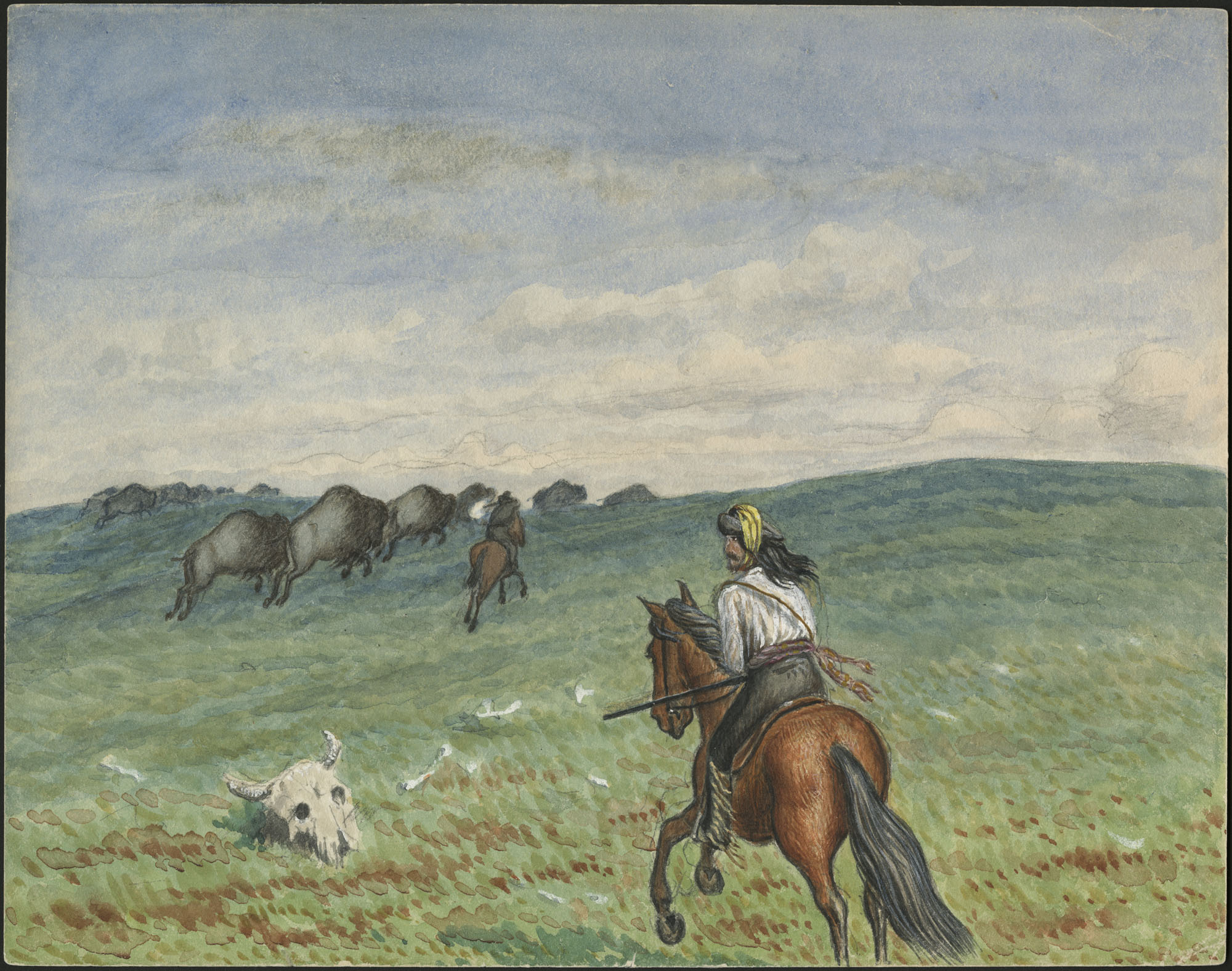
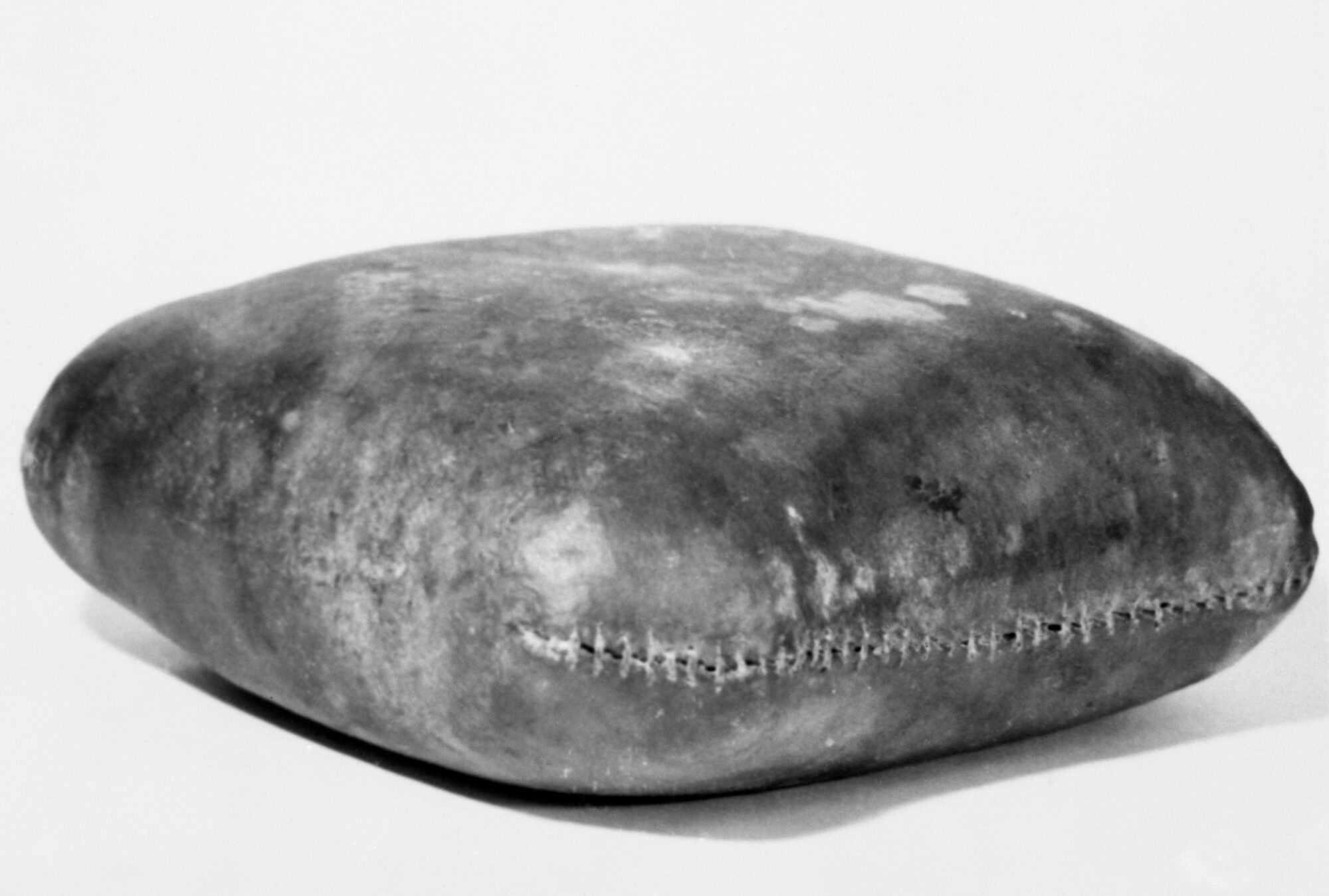
Though recipes vary, the essential ingredients are simple: dried meat and fat (buffalo for the most part).[2] Not only did the animal used to be superabundant, but Indigenous people could use the whole buffalo in pemmican production.[3] After the buffalo hunt, women began preparing the animals right in the field, needing to move quickly to prevent spoilage.[4] Men stripped the carcasses while the women cut the meat into thin slices for drying. Once the moisture was completely gone, men pounded the meat into a pulp, and the women mixed it with rendered fat and, occasionally, other ingredients like dried berries. That mixture was then put into bags made of buffalo hide, then sewn up with sinew for storage and preservation.[5] This was a complicated, time-sensitive process where one wrong step could’ve left the entire group with spoiled meat. In the middle of winter, waiting for the next buffalo hunt, that could mean starvation.
Pemmican is ultimately a survival food. It has a ton of calories and protein, and can last years without going bad. Taste was not necessarily at the top of mind, but it was more than purely utilitarian. Traditional pemmican is also called “sweet” pemmican.[6] Indigenous women used the softer, better-tasting fats from the buffalo, and dried whatever berries were in season—choke cherries, wild grape, saskatoons, etc.—and added them to the mixture.[7] In Victoria Calihoo’s account of her Metis family’s buffalo hunts, she even said that their pemmican was “the best and most nourishing food” she’d ever had.[8] The food was survival, yes, but it was made with care.
That changed when fur trading companies got involved.
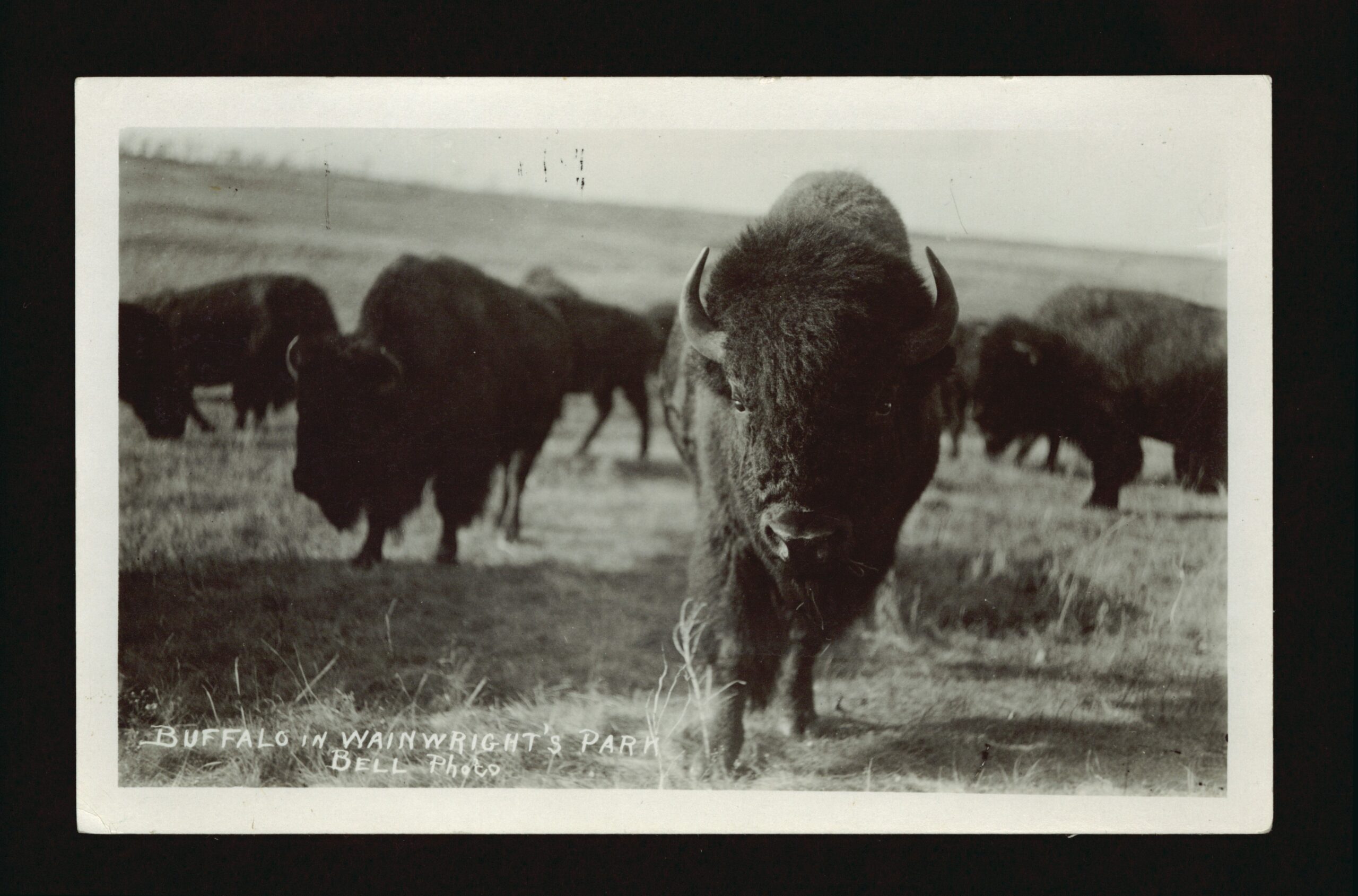
Imagine this: at the end of the 18th century, the prairies are absolutely loaded with buffalo—herds of over 10 000 individuals that prairie peoples could subsist on forever.[9] But just a few decades later, they’re just… gone. 1000 animals in tiny, isolated herds are all that remain of this incredibly important animal.
What happened?
Here’s what we know:
There are a couple different factors that contributed to the sharp decline of the buffalo, like drought, disease, and competition with European cattle herds. It’s argued that settler troops sent by the US and British Empire were told to intentionally slaughter buffalo to force Indigenous people onto reserves. It was this deliberate overhunting that truly decimated the population.[10] Seeing the abundance of buffalo still on the prairies, the Hudson’s Bay Company saw an opportunity. They could send out or hire hunters for the express purpose of collecting the tongues, robes, or heads to make taxidermy mounts. And then there was the demand for pemmican. During the buffalo season in 1833, Fort Edmonton was home to 46 men, 25 women, and 86 children, most making pemmican.[11] They were focused on making surpluses, but not for the Indigenous communities that lived in the area. For the most part, the HBC took the pemmican and sent it north to fur traders, or used it to push their influence further west.
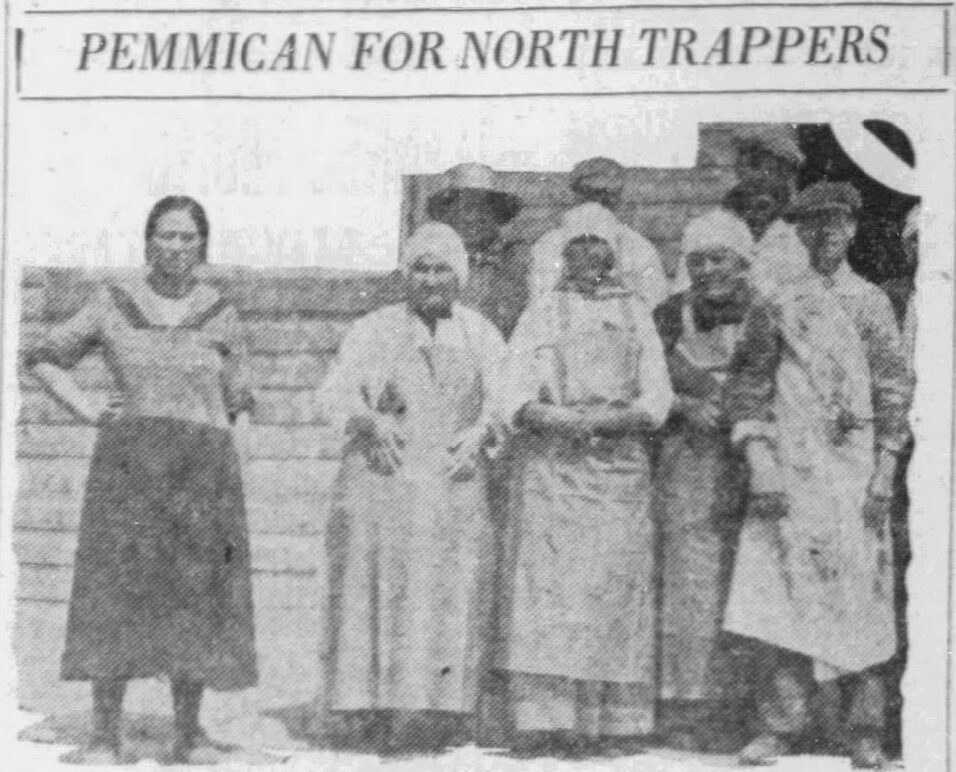
Pemmican was a major export for the fort, but also when Edmonton grew into a city. The Calder area, also known as “Packingtown,” was home to several Edmonton meat packing plants in the early 1900s, including the Dominion Government Pemmican factory. It was staffed by mostly First Nations and Metis women, because only they were “really efficient at this,” according to foreman J. Rowley.[12] Instead of physically pounding the dried meat into a pulp, one staff member would feed the slices of meat into an electric pulveriser that rendered them into powder.
The Journal’s story about the factory makes no mention of dried berries, or anything that would sweeten the mixture. Rowley notes that for it to be “most palatable,” the meat needs to be mixed with vegetables and fried. His wife warns women to not eat it too often, lest their appetite for it “fade.”
The stuff made in the forts also left much to be desired. American explorer and naturalist Robert Kennicott remarked in his journals that when he tried pemmican, it was filled with “hair, sticks, bark, spruce leaves, stones, sand, etc…”[13] I would hope that he had a bad batch, but as George Colpitts points out in his book Pemmican Empire, HBC was focused on making as much pemmican as possible, as cheaply and as rushed as possible.[14] For the Hudson’s Bay Company, and eventually the Canadian government, pemmican was cheap, it was easy (because they weren’t the ones making it), and a surplus meant they could expand. It was survival, too, but survival they could turn into a profit—to send away from the community who would have otherwise eaten it.
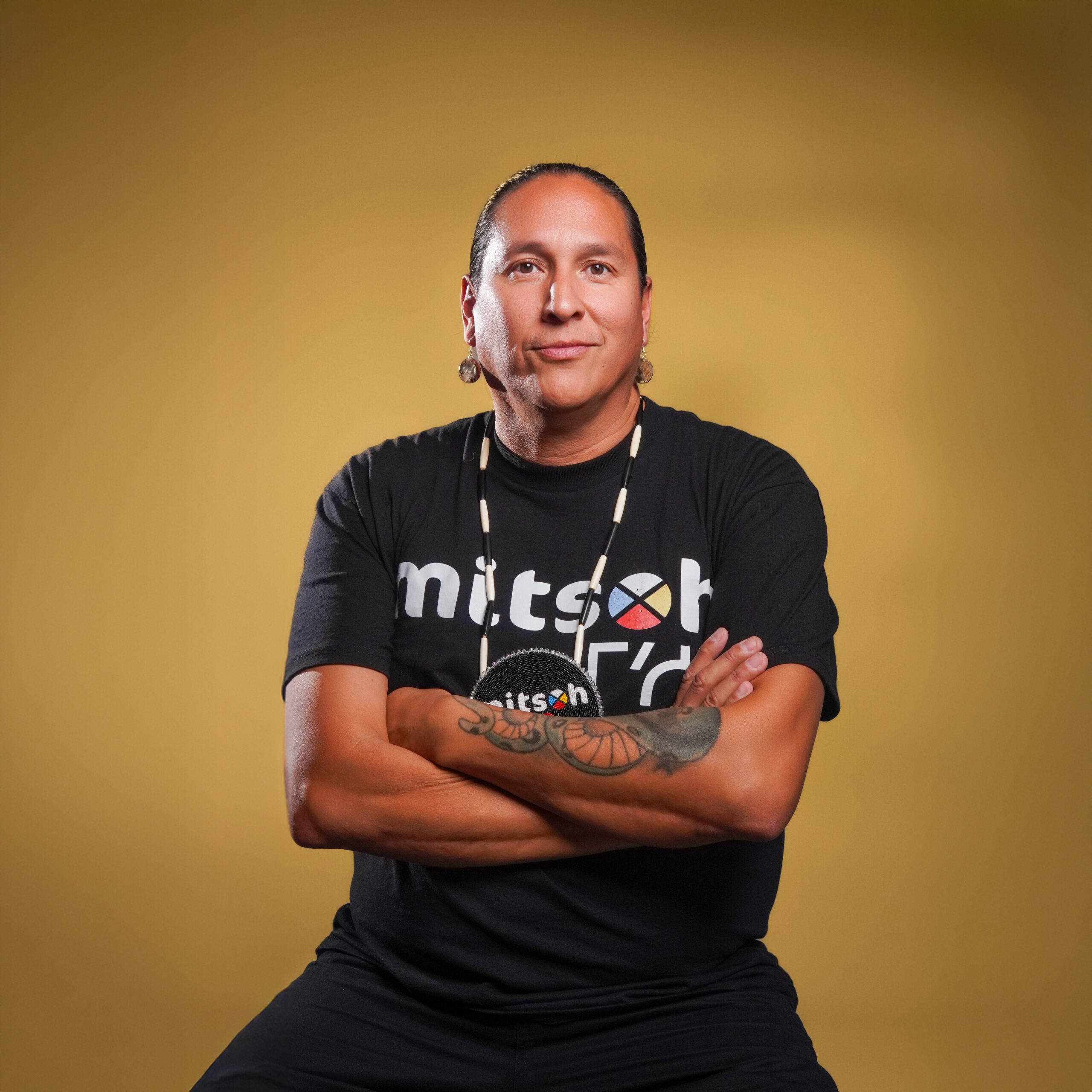
An Edmonton-based company called Mitsoh continues the tradition of Indigenous-owned pemmican production today. It was founded in 2018 by Ian Gladue. They initially specialized in dry meat,[15] but expanded to include pemmican too. Paige Janvier, a representative of Mitsoh, told me that this move “allowed [Mitsoh] to share a broader story of traditional Indigenous nutrition in a way that’s accessible today.” Their current flavour line-up includes saskatoon berry, blueberry, and strawberry.
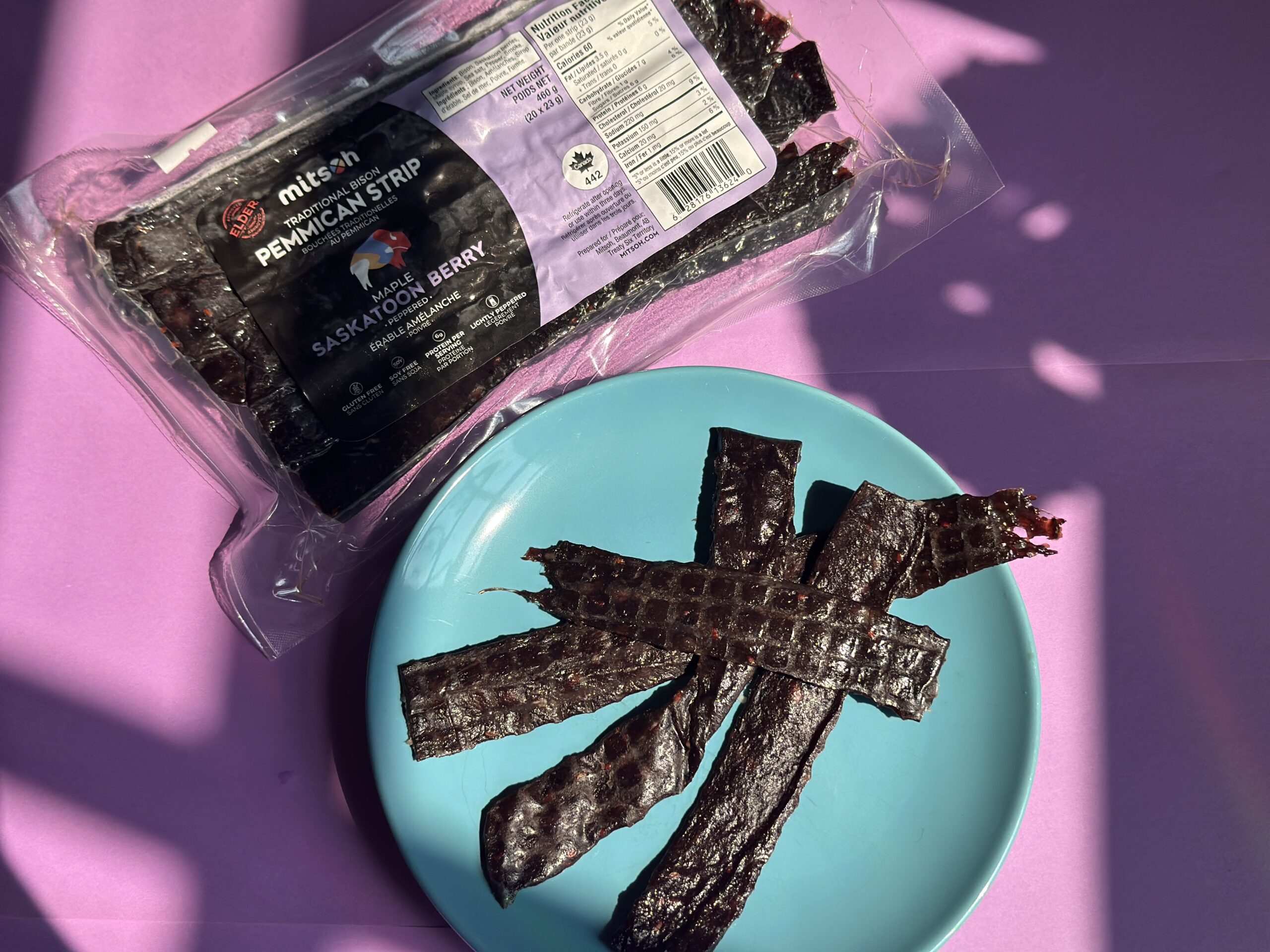
Mitsoh pemmican is so good. Sweet, yet you can definitely still taste the bison. The meat is nicely peppered and smoked to create a complex flavour profile that, I imagine, enhances the original Nêhiyaw recipe. And they’re now in hundreds of stores across Canada! For Mitsoh, accessibility is the name of the game, while also keeping a strong connection to the traditional knowledge that informs everything they do. “Our goal is to continue growing while staying grounded in our values,” Janvier said, “sharing traditional foods, supporting Indigenous communities, and creating more opportunities through economic reconciliation.”
The recipe has seen a lot of changes through the centuries, passing from Indigenous people to colonial hands, and back, but it remains significant for many First Nations and Metis communities.
[1] “Making of Pemmican on Large Scale New Industry at Calder,” Edmonton Journal (May 24, 1924): 18.
[2] For this article, I will be using the word “buffalo,” though “bison” can also be used to describe the same animal. From Lauren Markewicz’ Like Distant Thunder: “Just over 100 years ago, taxonomists wanted to more clearly distinguish between the buffalo of Africa and Asia and the buffalo of North America, and so recommended using the Latin term ‘bison.’ However, the word ‘buffalo’ continues to hold a lot of cultural significance, particularly for Indigenous people. One can think of ‘buffalo’ as the common name, and ‘bison’ as the scientific common name” (2017: 3).
[3] Colpitts, George. “The Pemmican Bioregion,” in Pemmican Empire, Cambridge University Press (2015): 59; Calihoo, Victoria. “Our Buffalo Hunts,” in Alberta Historical Review 8, no. 1 (Winter 1960): 25.
[4] Charette, Guillaume. “On Processing Hides and Making Pemmican,” in Vanishing Spaces: Memoirs of Louis Goulet (1859-1936), translated by Ray Ellenwood (1976): 55. https://rayellenwood.wordpress.com/wp-content/uploads/2018/11/vanishingspaces.pdf
[5] Calihoo, “Our Buffalo Hunts,” 25.
[6] Colpitts, Pemmican Empire, 98.
[7] Colpitts, Pemmican Empire, 82; Charette, “On Processing Hides,” 54.
[8] Calihoo, “Our Buffalo Hunts,” 25.
[9] Markewicz, Lauren. Like Distant Thunder: Canada’s Bison Conservation Story, Parks Canada (2017): 5, 12.
[10] Markewicz, Like Distant Thunder, 15.
[11] Colpitts, Pemmican Empire, 82.
[12] ”Making of Pemmican on Large Scale New Industry at Calder,” Edmonton Journal (May 24, 1924): 18.
[13] Kennicott, Robert. ”The Journal of Robert Kennicott, May 19, 1859-February 11, 1862,” in The First Scientific Exploration of Russian America and the Purchase of Alaska, ed. James Alton James, (Evanston: Northwestern University, 1942): 85-86.
[14] Colpitts, Pemmican Empire, 99.
[15] The company’s original name was Pânsâwân, which roughly translates to “dry meat” in nêhiyawêwin.