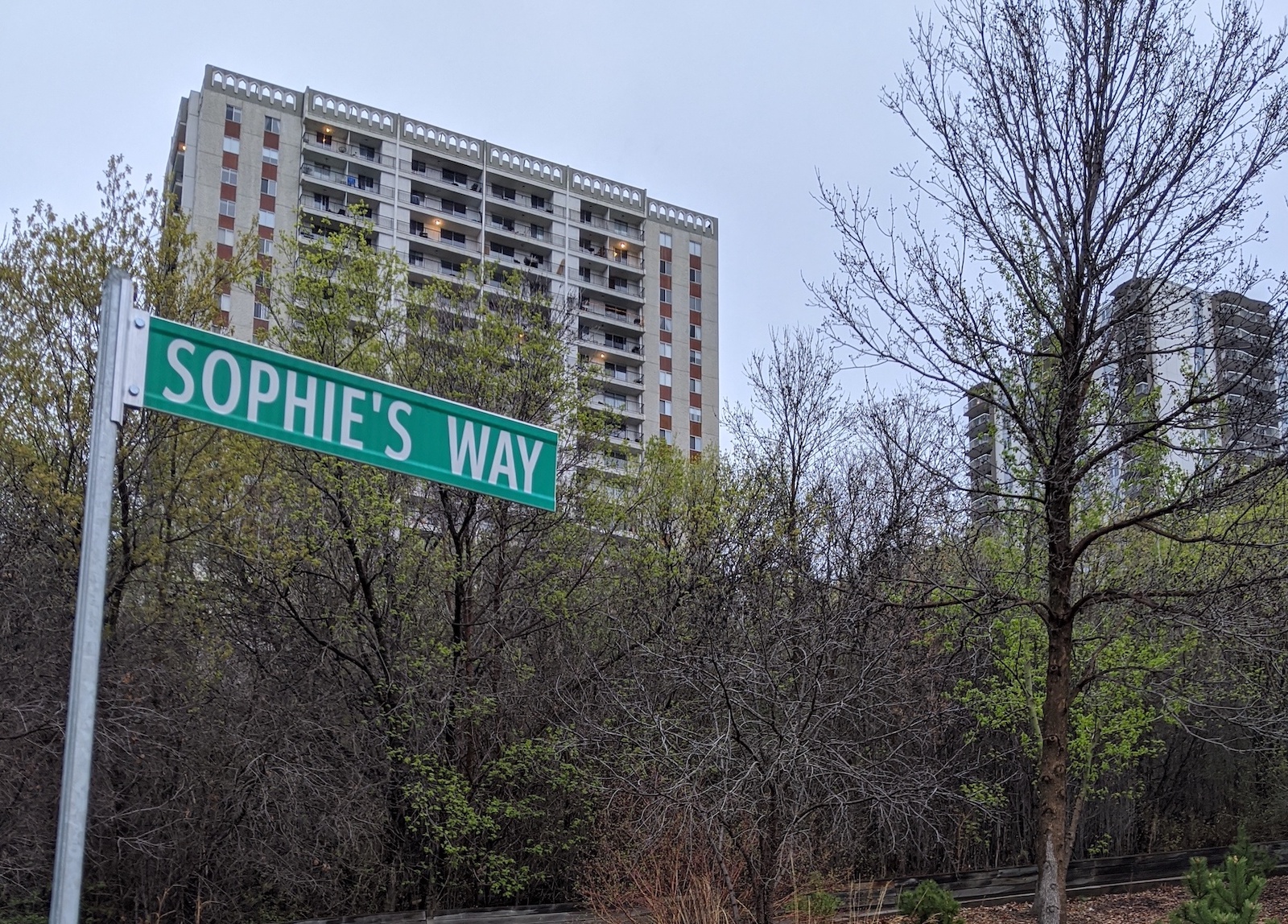
Sophie’s Way is a twist of concrete winding up a short but steep hill in the Edmonton river valley. The path is marked by a street sign on the Victoria Park Golf Course and Driving Range. This past winter while cross-country skiing, I stumbled, well, slid onto Sophie’s Way. The trail name sparked my curiosity to find Sophie and eventually led to a deeper understanding of Edmonton and its history of names.
If it hadn’t been for COVID-19, I wouldn’t have been on the Victoria Park golf course. Before the pandemic shut down everything, I regularly went to a fitness studio on Jasper Avenue. Now I had to find other ways of keeping in shape. The river valley trails offered exercise at the regulated two-metre distance and provided fresh air while quarantining in a downtown condo. So off I went with my skis. It was while gliding past a northeast section of the golf course that I noticed a path leading up to a tee-off. Next to it was a city street sign with the words Sophie’s Way written on it.
“Who is Sophie?” I wondered while catching my breath. “Why does she have a path named after her?”
At home, I looked up the name on the internet and couldn’t find anything. I searched and searched and found nothing connecting Sophie to the golf course. However, I did come across a history of the area and the different names it has had.
Left: A street sign marking Sophie’s Way. Photo courtesy of the author, May 2020. Right: A Google Map image of the Victoria golf course. Sophie’s Way is marked by the pink dot. Image captured by the ECAMP Team, November 2020.
We use names to honour people and history. We name streets, buildings and parks after those we want to remember. Names anchor us to our communities, our land. Without names, identities and cultures can be displaced and sometimes, disappear. Names also tell stories. The land the Victoria Park Golf Course and Driving Range calls home was first used by several Indigenous nations, such as the Nehiyawak (Cree), Nahkawininiwak (Saulteaux), Nakota Sioux and Niitsitap (Blackfoot) as a gathering place and burial grounds. Each nation had a name for the land.
The Nakota Sioux traditionally call the area ti oda, Many Houses, and the Niitsitapi call it omahkoyis, Big Lodge. The Nehiyawak traditionally call Edmonton amiskwaciy-wâskahikan, translating to Beaver Hills House. Mackenzie Brown, an Indigenous advocate, writer and artist, said the Nêhiyawêwin language isn’t like English. Nêhiyawêwin is verb- and action-based and the action of naming tells the story of the land.
“When that name is changed, you miss the real meaning. Amiskwaciy-wâskahikan, Beaver Hills House, was a place where people would come and forage. There was a diverse amount of plants and animals here. When the name was changed to Edmonton, it meant a place from England. It doesn’t tell the true story of the land,” Brown said.
Brown said colonialism had a massive impact on the way Indigenous people related to the land because it taught them that there were boundaries. The use of names meant drawing imaginary borders and lines while dispossessing the original inhabitants of their land and resources.
“We believe in the idea that land is to be shared. Not owned,” said Brown. “We all need to care for Mother Earth but colonialism turned the land into a resource, not a living being.”
 The pair also exploited Indigenous peoples through land dealings. Despite this, their names are found throughout Edmonton with two neighbourhoods bearing the names Secord and Central McDougall.
McDougall and Secord weren’t the only ones with a history of oppression. Oliver’s namesake, Frank Oliver, was an early settler and Member of Parliament who not only maltreated Indigenous peoples but minorities, too. The Oliver Community League is calling on the city to rename the inner-city neighbourhood.
In the case of Oliver, McDougall and Secord, the historical wrongs go beyond erasing the history of the area’s first inhabitants by commemorating figures who oppressed Indigenous people. Meanwhile, in a sign of change, the company responsible for the name Edmonton is leaving the city’s core. HBC is closing its store in the City Centre Mall. The Bay/Enterprise LRT station is the last vestige of HBC downtown, a few metres away from Amiskwaskahegan (Beaver Hills House Park).
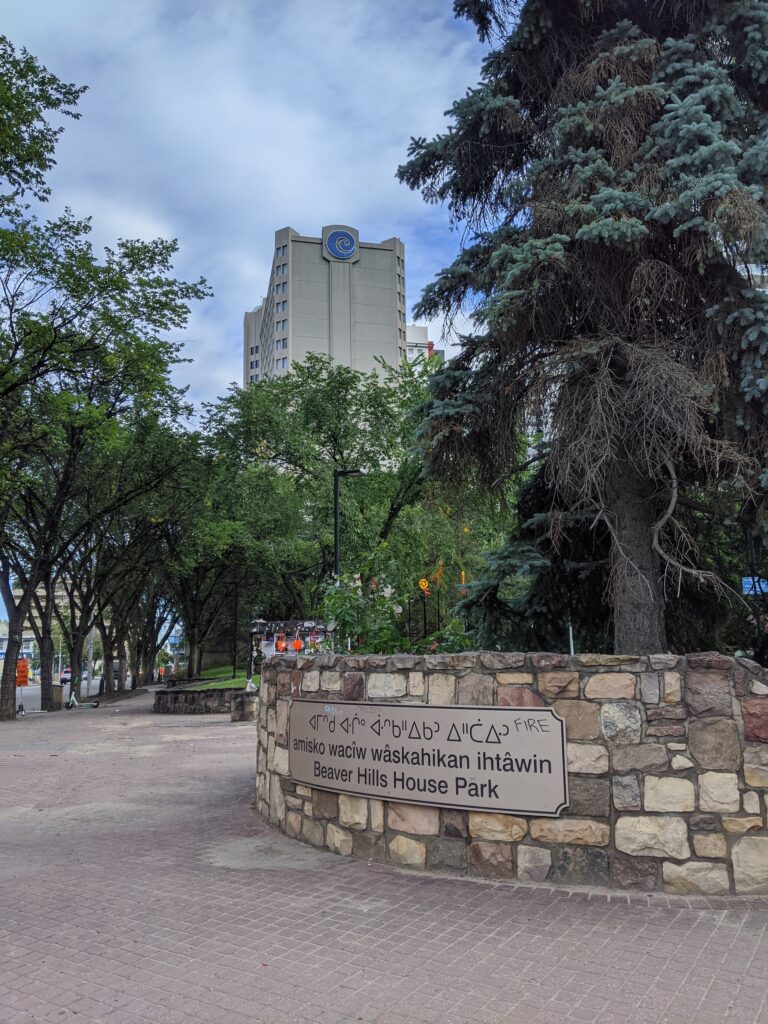 valley.
“By no means does it mean we’re limiting or ignoring other cultures,” said Sousa. “There are many Lebanese names, Iranian and Sikh names in Edmonton, too.”
Sousa points to Gurdwara Road, an honourary name for a street in Mill Woods. Sohan Singh Bhullar Park is in the same area. Sohan Singh Bhullar came to Edmonton in 1953 and helped newcomers feel at home. The park honours his work.
What was Sophie honoured for? A long-time Edmonton-area woman, Lavonne Hailes, theorized that the path’s name stemmed from the practice of giving names to golf course holes in the late 1980s. She thought Sophie was a reference to Sophie Morigeau, a late 19th-century Métis businesswoman. Lavonne emailed numerous contacts, asking if they knew anything about Sophie’s Way.
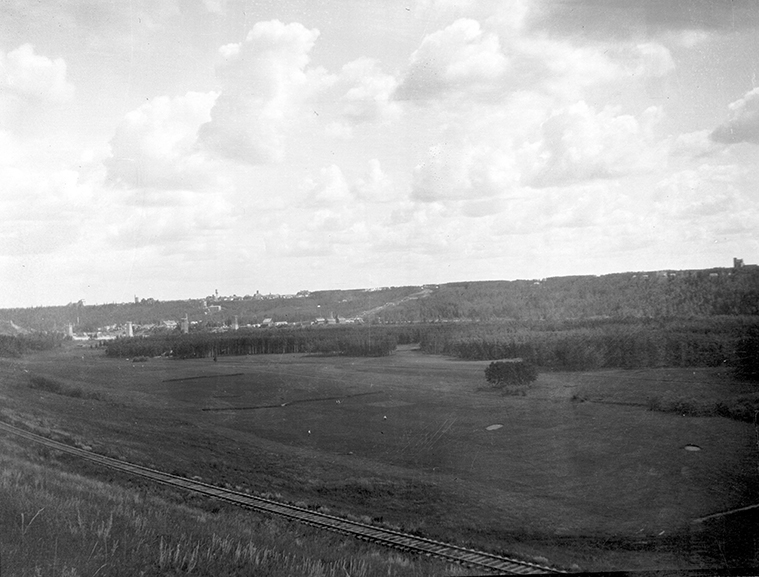 Amiskwaciy Waskahikan: Indigenous Experiences in Edmonton,” Explore Edmonton. Retrieved Aug. 1, 2020.
CBC News. “Plains Cree language used to name Edmonton LRT bridges” CBC Edmonton Retrieved June 25, 2020.
City of Edmonton. “Indigenous Place Names of Edmonton” City of Edmonton’s Open Data Portal. Retrieved June 25, 2020.
City of Edmonton. “Naming Process Committee.” Retrieved June 25, 2020.
City of Edmonton. “Victoria Golf Course and Driving Range.” Retrieved April 14, 2020.
Ivany, Kathryn. “River Crossing Stories, Donald Ross of Rossdale,” City of Edmonton. Retrieved Sept. 9, 2020.
Paches, Robyn. “Names—A Unifying Tool, OCL President Column” The Yards, Fall 2020, page 4.
Priestley, Mel. “Where did Edmonton get its name? The origin of Edmonton’s name isn’t glamorous, but it dates back almost a millennium,” Taproot Edmonton Retrieved June, 12, 2020.
Ryning, David. “King of the Hill, Hilltop House: A Gracious Echo of City’s Past,” Edmonton Community Foundation. Retrieved May 29, 2020.